
Support Your Sleep Rhythm
Why summer can disrupt your rest — and how to gently restore balance
Summer brings longer days, brighter evenings, fuller schedules, vacations, celebrations, late sunsets, and more time outside. On the surface, it feels energizing and freeing.
But beneath all that sunshine, many people quietly notice something else happening too:
They’re tired.
Not necessarily because they are not sleeping enough, but because their bodies are struggling to fully downshift.
You may notice difficulty falling asleep, waking during the night, feeling overstimulated at bedtime, restless sleep, or feeling exhausted even after a full night's sleep.
This week in Prana Yoga Center’s Summer Self-Care Series, we’re focusing on how to support your summer sleep rhythm naturally through restorative yoga, nervous system regulation, and the wisdom of the Ayurvedic clock.
Because rest is not just about getting more sleep.
It is about helping your entire system remember how to soften.
Rest is not just about getting more sleep. It’s about helping your entire system remember how to soften.
Your Body Runs on Rhythm
Your body is deeply connected to cycles and rhythms.
Light and darkness.
Activity and rest.
Energy and recovery.
This natural rhythm is often called your circadian rhythm — your body’s internal clock that influences sleep, hormones, digestion, body temperature, mood, and energy levels.
When this rhythm feels balanced, you may notice that you feel sleepy at night more naturally, wake with steadier energy, think more clearly, and move through the day with a more stable mood.
But modern life constantly disrupts these rhythms.
Artificial light. Phones and screens. Busy schedules. Late-night stimulation. Irregular routines.
And during summer, the extended daylight hours can make it even harder for your body to recognize when it is time to slow down.
You stay outside later.
You stay mentally stimulated longer.
You push bedtime later without realizing how much your nervous system still needs consistency.
Then suddenly, your body feels tired but wired.
Ayurveda and the Body Clock
Ayurveda teaches that different times of day carry different energetic qualities. Understanding these rhythms can help you work with your body instead of against it.
According to the Ayurvedic clock, the hours between approximately 6 PM and 10 PM are associated with slower, heavier, more grounding energy.
This is considered the body’s natural window for winding down.
After around 10 PM, however, the body often shifts into a more active, energetic phase. This is why many people notice a “second wind” late at night.
You may suddenly feel more alert, hungry, mentally active, productive, or tempted to stay up later.
But Ayurveda suggests that regularly pushing past your body’s natural wind-down window can leave you feeling more depleted over time.
Your body thrives on rhythm and consistency.
Not perfection, but rhythm.
Summer Light Changes Everything
One reason summer can disrupt sleep so easily is that light strongly influences your nervous system and hormone production.
Exposure to natural light during the day is healthy and regulating. But too much brightness and stimulation late into the evening can delay the body’s natural signals for rest.
In simple terms, your body can become confused about when it is actually time to sleep.
That is why one of the simplest but most effective self-care practices this week is:
Dim the lights earlier.
Not because you are trying to create strict rules.
But because your nervous system is constantly responding to your environment.
Soft lighting, quieter evenings, slower movement, and reduced stimulation all send the body a message:
You are safe to rest now.
Rest Is a Skill
Many people think rest should happen automatically.
But in today’s overstimulated world, rest often becomes something you have to intentionally practice.
Especially if your nervous system spends most of the day in problem-solving mode, multitasking, caregiving, rushing, scrolling, reacting, or planning ahead.
Your body does not always know how to immediately transition from doing into deep relaxation.
That is why restorative yoga can feel so powerful.
Restorative practices are not about stretching deeper or achieving poses. They are about teaching your body how to receive support.
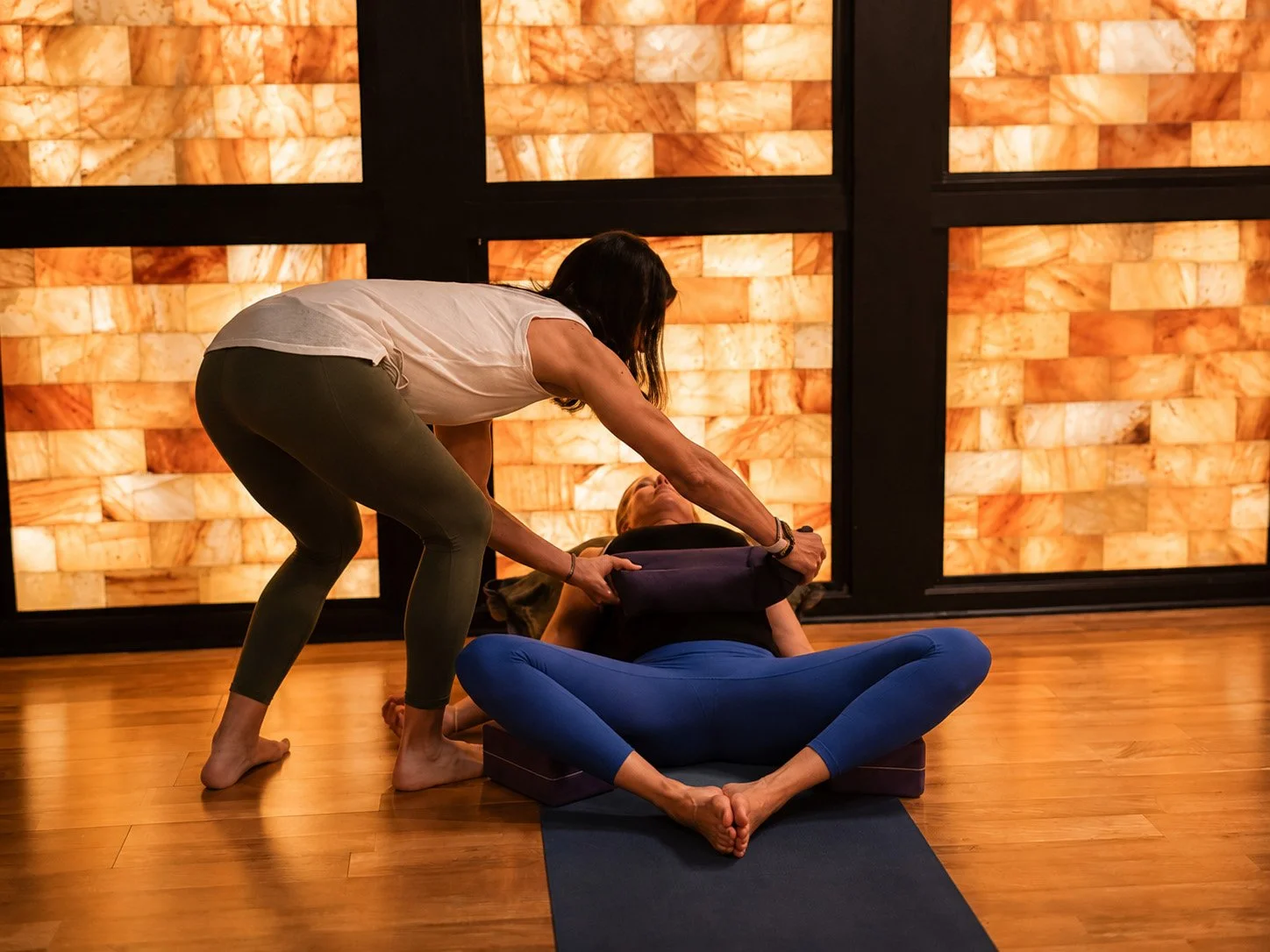
Support is part of the practice. In restorative yoga, props and gentle guidance help the body soften without force or strain.
Why Restorative Yoga Helps Sleep
This week’s practices focus on longer holds, restorative postures, gentle forward folds, nervous system downshifting, and Legs Up the Wall.
These poses work differently from active yoga practices.
Instead of building heat and stimulation, they encourage slower breathing, muscle release, nervous system regulation, reduced tension, and mental quieting.
Forward folds, especially, often create an introspective, calming effect.
There is something deeply soothing about physically turning inward.
You may notice your breath naturally slowing, your jaw softening, your thoughts quieting slightly, or your shoulders releasing tension.
This is your body beginning to downshift.
The Power of Legs Up the Wall
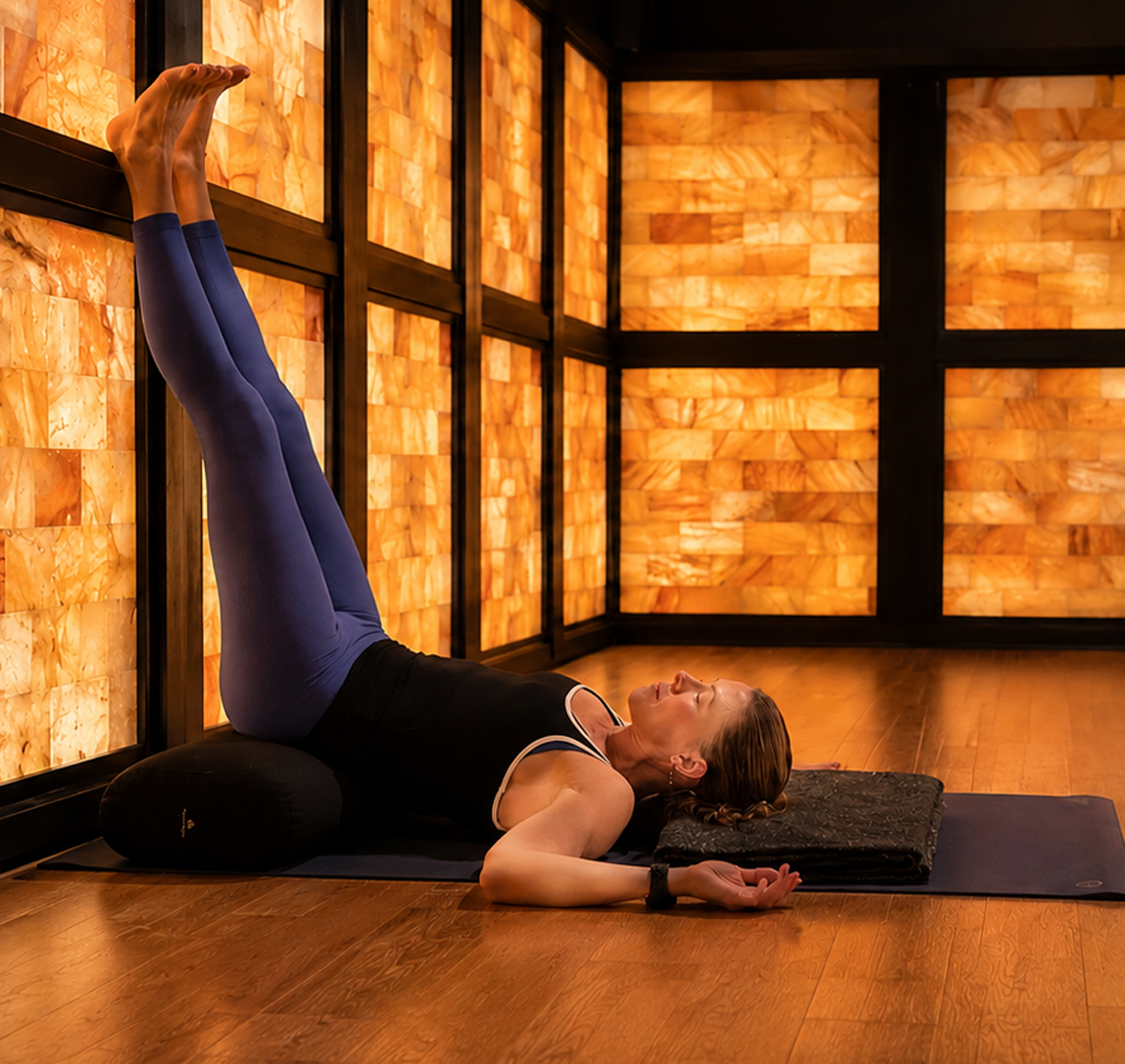
One of the simplest and most effective restorative practices you can do is Legs Up the Wall, also known as Viparita Karani.
And the best part?
It does not have to happen only before bed.
You can practice it after work, in the middle of the day, after travel, after being on your feet, or anytime your nervous system feels overloaded.
This posture gently encourages circulation while also signaling safety and relaxation to the body.
You do not need flexibility.
You do not need experience.
You do not need to do it perfectly.
You simply allow yourself to pause.
Even 5 to 10 minutes can feel surprisingly regulating.
Kathryn’s Systematic Relaxation Practice
This week, Prana’s very own Kathryn Carr is sharing a short guided relaxation practice designed to help the entire body soften and unwind.
You can practice this before bedtime, during a stressful moment, after restorative yoga, or anytime your nervous system needs a reset.
Pairing this relaxation with Legs Up the Wall can be especially calming when your mind feels overstimulated or your body feels tense from constant activity.
Practice with Kathryn:
Settle in, get comfortable, and allow Kathryn to guide you through this short relaxation practice designed to help the body soften, unwind, and prepare for deeper rest.
An 8-minute guided relaxation to support rest, regulation, and your summer sleep rhythm.
The Nervous System Needs Transitions
One major reason sleep struggles happen is that many people move directly from stimulation into bed without any real transition.
Think about how often evenings look like this:
Answering emails.
Scrolling social media.
Watching intense TV.
Multitasking.
Sitting under bright overhead lighting.
Staying mentally engaged until the very last moment.
Then suddenly: “Why can’t I fall asleep?”
Your nervous system often needs a bridge between activity and rest.
This week’s practices focus on intentionally creating that bridge.
Not with force.
Not with perfection.
But with softness and consistency.
Small Evening Rituals Matter
You do not need an elaborate nighttime routine to improve rest.
Tiny shifts can make a meaningful difference.
Try dimming the lights after sunset, putting your phone down a little earlier, taking a few slow breaths before bed, practicing Legs Up the Wall for 5 minutes, stretching gently instead of scrolling, or listening to Kathryn’s relaxation practice before sleep.
These small rituals become signals.
Over time, your body begins to recognize:
This is when we begin to slow down.
Rest Is Productive, Too
One of the hardest mindset shifts for many people is believing rest has value.
Especially in a culture that constantly rewards productivity, busyness, and pushing through exhaustion.
But your body is not designed to stay in a constant state of activation.
Sleep is when muscles repair, hormones regulate, the brain processes information, the nervous system resets, and emotional recovery happens.
Rest is not separate from wellness. It is wellness.
And often, the more depleted you feel, the more restorative practices matter—not less.
You Don’t Have to Earn Deep Rest
Many people unconsciously believe they must earn rest by becoming exhausted first.
But true self-care means supporting your body before burnout happens.
This week is an invitation to stop treating rest like an afterthought.
To create rhythms that support your energy instead of constantly draining it.
To remember that slowing down is not laziness.
It is wisdom.
You don’t have to earn deep rest.
A Gentle Practice for This Week
This week, try creating a simple evening ritual:
Dim the lights earlier.
Step away from screens for a few minutes.
Practice a gentle forward fold.
Place your legs up the wall.
Breathe slowly into your belly.
Soften your jaw and shoulders.
Allow stillness to happen without forcing it.
Then notice:
How does your body respond when you stop asking it to stay “on” all the time?
You may discover that your body has been asking for softness all along.
Let Summer Include Rest, Too
Summer often encourages movement, plans, travel, and activity.
And all of that can be beautiful.
But this season can also become an opportunity to reconnect with rest in a gentler, more intentional way.
Not just sleep, but restoration.
The kind that allows your body to exhale fully.
The kind that reminds your nervous system: you do not always have to keep going.
Sometimes healing happens in the pause.
And sometimes the most supportive thing you can do for yourself is simply learning how to soften before exhaustion forces you to.
Join us for class this week at Prana Yoga Center and explore practices that help you move, breathe, rest, and reconnect with your natural rhythm.
New to Prana? Our introductory offer is a simple way to begin.
A few Common Questions
-
Restorative yoga may support better rest by helping the body slow down through supported postures, longer holds, softer breathing, and reduced stimulation. It is not a replacement for medical care, but it can be a helpful part of an evening wind-down routine.
-
Longer daylight hours, later sunsets, travel, fuller schedules, heat, and evening stimulation can all affect the body’s natural sleep rhythm. Light exposure is one of the strongest cues for the circadian rhythm, which helps regulate sleep and wake cycles.
-
Legs Up the Wall is a simple restorative yoga posture that can help the body pause, settle, and shift toward a calmer state. Many people practice it after work, after travel, or before bed when they feel overstimulated or tired.
-
The Ayurvedic clock is a traditional way of understanding the energetic qualities of different times of day. In Ayurveda, the early evening is considered a natural time to slow down, while staying up too late may bring a “second wind” that makes rest more difficult.