

Have you ever noticed how much clearer your mind feels after a yoga class? Perhaps you arrived feeling overwhelmed, distracted, or mentally exhausted, only to leave feeling calmer and better equipped to handle whatever comes next.
Research suggests that yoga may support stress management and emotional well-being. Some studies also point to benefits for attention and other thinking skills, although researchers are still exploring how these effects develop.
While you may initially turn to yoga for flexibility, strength, or balance, the combination of movement, breathing, and rest offers another reason to return to your mat.
Want to explore this connection through movement and rest? Join Karissa for Yoga & the Calm Brain at Prana Yoga Center in Geneva on Friday, November 13, from 6–8 p.m. No previous yoga experience is necessary.
Understanding the connection between yoga and your nervous system
Your brain and body are constantly communicating. Throughout your day, your nervous system responds to everything from work deadlines and family responsibilities to physical activity and emotional experiences.
When you’re under stress, your sympathetic nervous system helps prepare your body to respond. Your heart rate may increase, your breathing may change, and your attention may shift toward perceived threats.
This response is essential for protecting you. But ongoing stress can leave you feeling distracted, fatigued, or overwhelmed.
Yoga offers opportunities to notice these responses. Through mindful movement, breathing practices, and intentional pauses, you can explore what helps you move between activity and rest.
That awareness may help you recognize when you need a different pace, a little movement, or time to recover.
Practicing focus and mental clarity
If you’ve ever struggled to concentrate while juggling multiple responsibilities, you know how exhausting a busy mind can become.
Yoga encourages you to bring your attention into the present moment. Whether you’re balancing in Tree Pose, coordinating your breath with movement, or noticing sensations in a seated posture, you’re practicing attention.
Your mind will wander. Returning your attention is part of the practice.
Research on Hatha Yoga has found improvements in attention and information processing in older adults after eight weeks of practice. These findings are promising, but they don’t mean everyone will experience the same changes.
You don’t need to master complicated postures to explore this aspect of yoga. Simple movement and a familiar place to rest your attention can give you something to return to when your mind drifts.
The role of breathing in stress recovery
Your breath offers one way to explore the relationship between your body and your state of mind.
When you’re stressed, your breathing may become rapid or shallow. For some people, slow, comfortable breathing can help create a sense of ease.
Yoga incorporates breathing practices, known as pranayama, that help you become more aware of your breathing patterns. Different practices can feel settling, energizing, or unfamiliar.
There is no need to force a deep breath or follow a particular rhythm. You can begin by noticing your natural breathing while sitting at your desk or winding down before bed.
If focusing on your breath feels uncomfortable, you can place your attention on your feet, a gentle movement, or something you can see.
Why restorative rest matters
In a culture that often celebrates productivity, intentional rest can feel surprisingly difficult.
Restorative Yoga uses props, comfortable positioning, and extended periods of stillness to support rest. Rather than asking your muscles to hold you in a demanding posture, bolsters, blankets, and other supports help reduce effort.
As your body settles, you may notice your breathing becomes easier, or your muscles soften. Your thoughts may remain busy, and that is also a valid experience.
Research into Restorative Yoga specifically is still developing. In your own practice, you can begin by noticing how comfortable support and time to rest feel for you.
Rest isn’t something you need to earn. It can be a valuable part of your yoga practice.
Different brains, different experiences
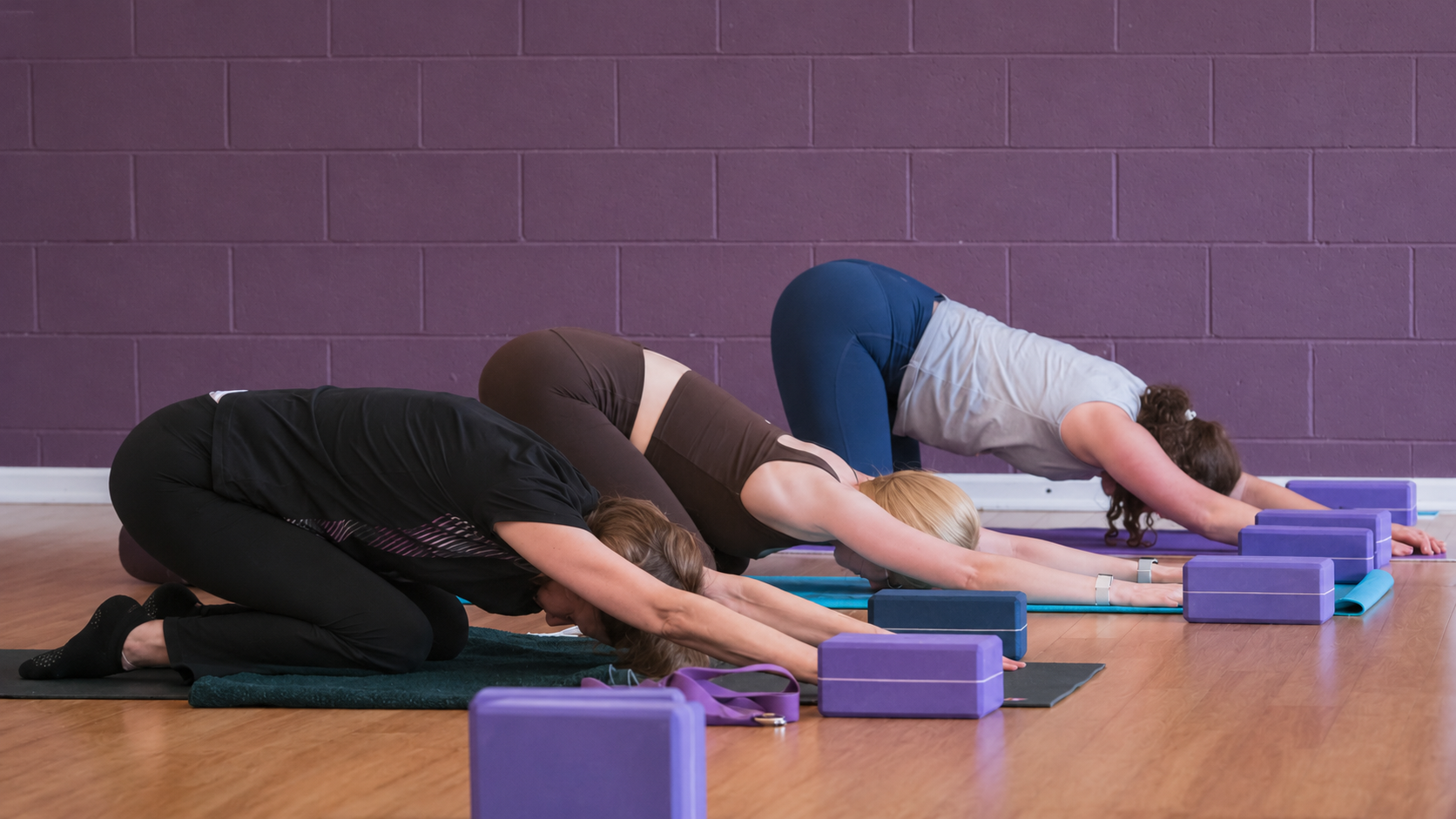
Not everyone experiences yoga in the same way.
If you’re neurodivergent, your sensory preferences, attention, or responses to relaxation practices may shape what feels supportive. Those preferences also vary from person to person.
Closing your eyes, remaining still, or practicing a particular breathing technique might feel comfortable one day and less helpful another.
As Prana teacher Karissa James explains, “If you’re in a heightened state, accessing the breath can feel more agitating at times. I’ll often recommend the practice of focusing on the senses.”
One option she suggests is the 5-4-3-2-1 method, which invites you to notice:
5 things you can see
4 things you can touch
3 things you can hear
2 things you can smell
1 thing you can taste
It’s a simple example of how having choices within your practice can help you find a point of attention that feels more comfortable.
You don’t need to make your practice look like anyone else’s to discover what supports you.
Explore Yoga & the Calm Brain at Prana
If your mind feels busy even when you finally have time to rest, this evening offers space to explore what helps you settle. Join Karissa James for accessible movement, supported rest, and practical insight into the connection between yoga and your brain.
Friday, November 13, 2026 | 6:00–8:00 p.m.
Prana Yoga Center | Geneva, Illinois
Drawing from neuroscience research, yoga philosophy, and more than 20 years as a special education teacher, Karissa will make the science approachable and practical.
You’ll explore the connection between yoga and brain function before experiencing an accessible Hatha Yoga practice focused on attention, coordination, and awareness.
Next, you’ll transition into supported Restorative Yoga postures to explore the experience of intentional rest. The evening concludes with conversation and time for questions about bringing these practices into everyday life.
No previous yoga experience is necessary. Options will be offered throughout.
Explore what helps you feel more focused and settled, with guidance from Karissa and time to ask questions. Together, you’ll consider how movement, breathing, and rest can fit into everyday life.
Get a feel for Karissa’s approach before joining us: try her short guided box breathing practice →
Frequently asked questions
-
No. Thoughts and distractions are a normal part of practice. Noticing that your attention has wandered and gently returning to movement, breath, or another point of focus is part of practicing awareness.
-
You can allow your breathing to happen naturally and choose another point of attention, such as your feet touching the floor or a gentle movement. Let your teacher know what feels comfortable so you can explore options.
-
Prana Yoga Center in Geneva is offering Yoga & the Calm Brain with Karissa James on November 13, 2026. The workshop combines education, accessible Hatha Yoga, supported Restorative Yoga, and conversation. No previous yoga experience is required.
We’d Love to Hear From You
What do you notice after a yoga class?
Tell us in the comments below: does your mind feel quieter, clearer, more energized, or something else?