
Yoga Tools for Mood Regulation & Nervous System Balance
When You Feel Wired or Worn Down
By Kristen Kauke, LCSW, E-RYT 500, Ayurvedic Yoga Specialist and trained in yoga-informed psychotherapy. Yoga Teacher at Prana Yoga Center
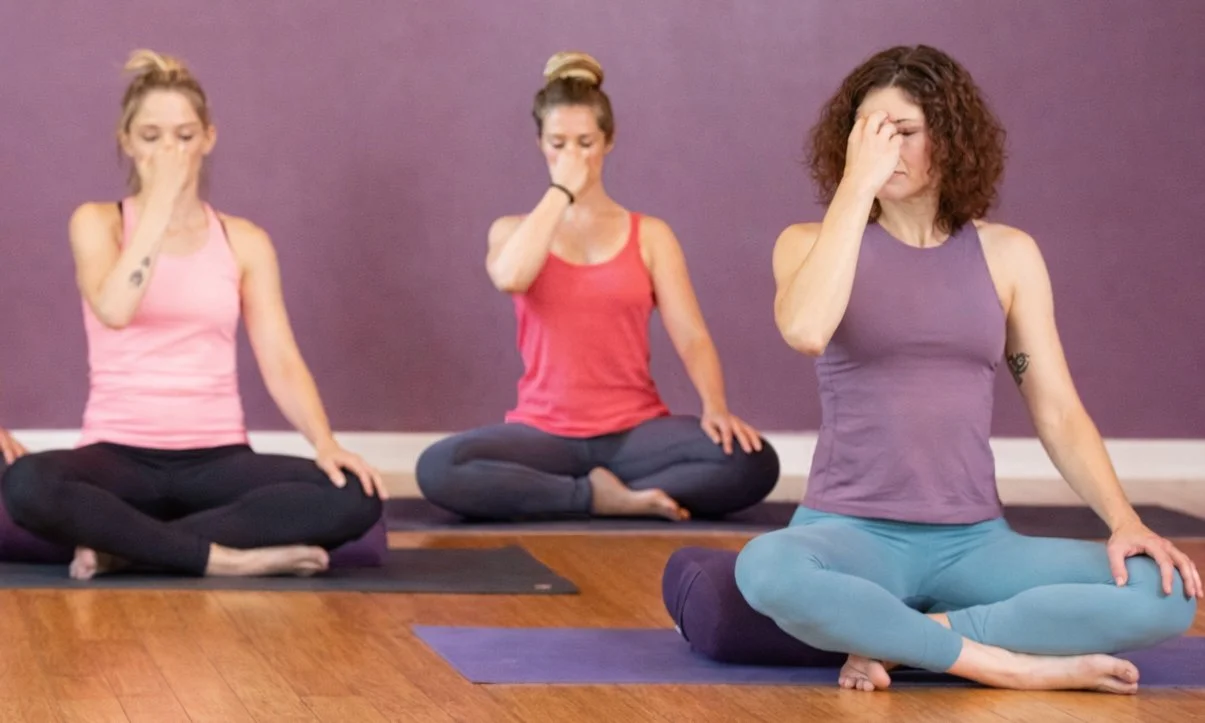
Students practice Nadi Shodhana (alternate nostril breathing), a traditional yogic breath technique used to support nervous system balance and emotional regulation.
At different points in life, you may feel overstimulated and anxious—or heavy, depleted, and unmotivated. Some days your thoughts race. Other days, it’s difficult to find momentum. Many people move between these states, wondering how to feel steady again.
Yoga offers practical tools for working with these shifts.
When practiced with intention, yoga becomes more than physical exercise. It becomes a method of nervous system regulation—supporting mood balance, stress relief, and emotional resilience in everyday life.
At Prana Yoga Center in Geneva, Illinois, we explore yoga as an integrated practice that supports both body and mental wellbeing.
How Yoga Supports the Nervous System
The autonomic nervous system governs stress responses, rest, and recovery. When it becomes dysregulated, you may experience anxiety, irritability, brain fog, fatigue, or emotional swings.
Yoga influences this system through:
Breathwork (pranayama)
Mindful movement
Focused attention
Restorative practices
Slow, steady breathing can signal safety and calm. Intentional movement can help release excess activation. Restorative postures can encourage recovery. Energizing sequences can gently lift low mood.
These tools have been used for thousands of years. Today, many practices described as “grounding” or “regulation techniques” are rooted in traditional yoga philosophy.
Understanding Mood Through the Maha Gunas
A helpful framework within yoga philosophy is the concept of the Maha Gunas—three qualities that influence mental and emotional states:
Rajas — activity, stimulation, restlessness
Tamas — heaviness, inertia, lethargy
Sattva — clarity, harmony, balanced energy
Everyone experiences these qualities.
When rajas dominates, you may feel anxious, wired, or unable to settle.
When tamas dominates, you may feel low, fatigued, or foggy.
Sattva represents steady energy and emotional clarity.
The goal is not to eliminate rajas or tamas. Both serve important functions. Instead, yoga teaches you to recognize when one quality has become excessive and how to restore balance.
Downregulating Anxiety & Gently Lifting Low Mood
One of the most empowering aspects of yoga is learning to choose the right practice for your current state.
For excess rajas (anxiety or overstimulation), supportive practices may include:
Lengthened exhalation breathing
Forward folds
Restorative poses
Guided meditation
For excess tamas (low mood or heaviness), supportive practices may include:
Gentle backbends
Rhythmic breathwork
Light dynamic movement
Exposure to natural light
Somatic techniques such as tapping, shaking, or dry brushing may also help release accumulated stress through physical sensation and rhythm.
These practices are not about fixing yourself. They are about listening and responding with awareness.
Small, Sustainable Practices Matter Most
You do not need an hour-long routine to experience benefit.
Short, consistent practices can support nervous system balance over time. A few minutes of intentional breathing before a difficult conversation. Gentle movement in the morning to lift heaviness. Restorative poses in the evening to settle the body.
Consistency often matters more than intensity.
By learning to recognize your internal state and respond appropriately, you build emotional resilience and greater self-trust.
Integrating Mental Health & Yoga
Yoga is not therapy, but it can be a powerful complement to mental health support.
Many yoga teachers, including those with backgrounds in social work and mental health, integrate modern nervous system science with traditional yoga philosophy. This integrated approach offers practical tools that can be used both on and off the mat.
Yoga provides a framework for understanding mood shifts not as personal failures, but as natural fluctuations in energy that can be worked with skillfully.
Who Can Benefit from Yoga for Mood Support?
Yoga tools for nervous system regulation may be helpful if you:
Experience anxiety or chronic stress
Notice fluctuating energy levels
Struggle with low mood or brain fog
Feel overstimulated by daily demands
Want practical, embodied tools for emotional balance
No prior experience with yoga philosophy is required. These practices can be adapted for beginners and experienced practitioners alike.
Frequently Asked Questions
-
Yes. Breathwork, slow movement, and restorative practices can help calm the nervous system and reduce symptoms of anxiety by shifting the body out of a stress response.
-
It refers to practices that balance activation and rest through intentional breathing, movement, and awareness techniques.
-
Yoga can support emotional wellbeing, but it is not a replacement for medical or mental health treatment. It works best as part of a broader support system when needed.
-
No. Nervous system regulation practices focus on breath and awareness, not advanced physical postures.
Experience These Tools in a Guided Workshop
eady to move from understanding these tools to experiencing them?
Join Kristen Kauke for Regulate & Rejuvenate: Yoga Tools to Manage Mood on:
Sunday, March 1, 2026
11:00 AM – 12:30 PM
Himalayan Salt Room
Prana Yoga Center, Geneva, IL
In this intimate, experiential workshop, you’ll practice breathwork, mindful movement, and somatic techniques designed to help you downregulate anxiety, gently lift low mood, and build practical nervous system resilience.
The Himalayan Salt Room offers a uniquely calming environment to deepen the experience.
Space is intentionally limited to maintain a supportive and personalized setting.
When you notice yourself feeling wired—or worn down—what helps you return to balance?
If you’d like to experience these tools with guidance and support, consider joining us on March 1. You’re welcome to share your thoughts or questions in the comments below.