
Restorative Yoga and Grief: Inviting the Body Into the Healing Process
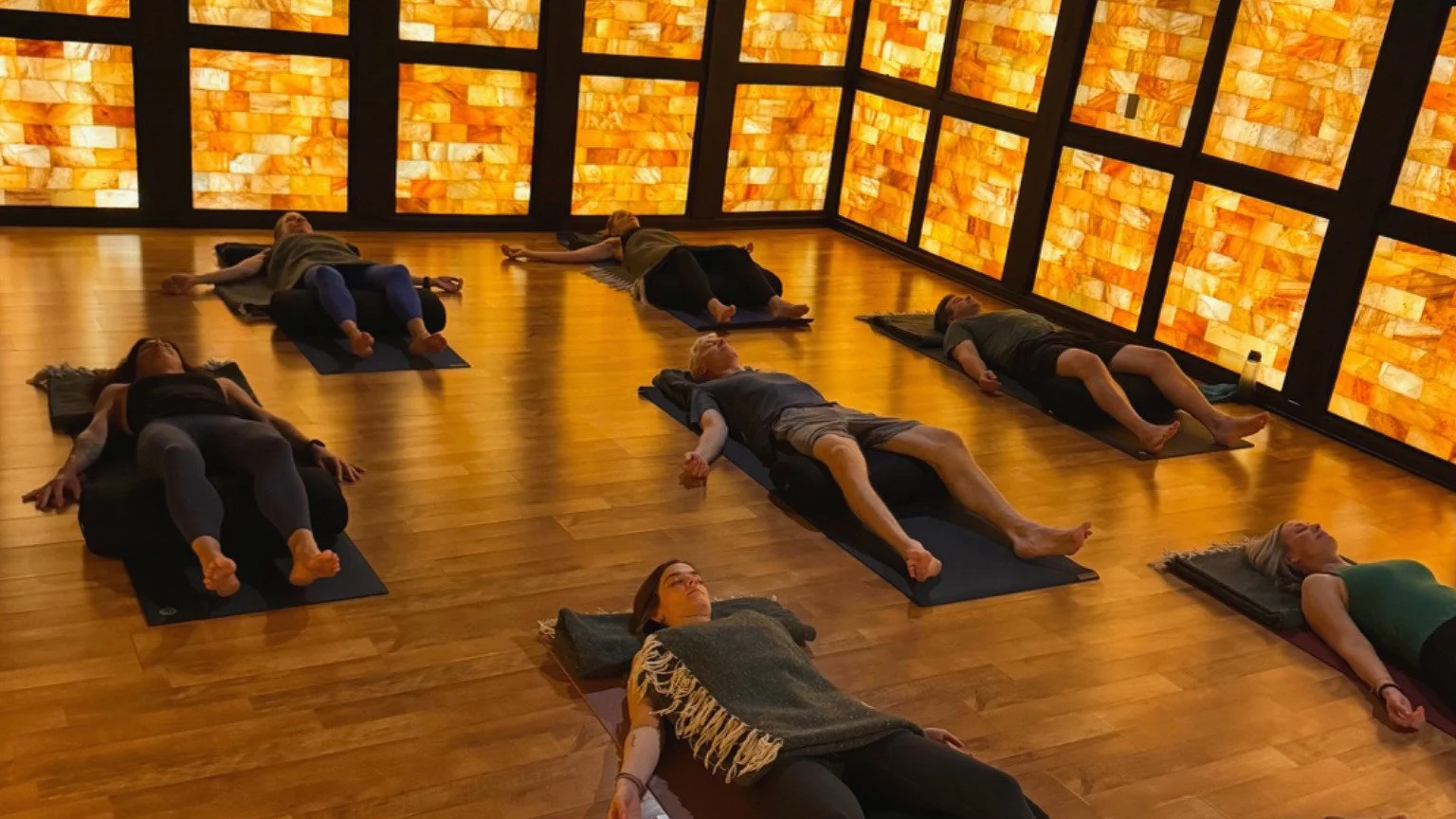
You probably think of grief as something that happens in your mind and heart. You picture it as thoughts you can't stop having, or a sadness that sits behind your eyes when memories surface.
But grief doesn't stay in your mind. It can affect your body, too.
You might notice it in your breathing, your posture, your energy, or the tension you've been carrying without even realizing it.
And sometimes, tending to your body can become an important part of caring for yourself through grief.
You Don't Always Realize How Much Your Body Is Carrying
Most of us walk through our days barely inhabiting our own bodies.
You register comfort, discomfort, hunger, fatigue—the surface-level signals—and move on.
You rarely pause long enough to feel the full depth of what you're carrying: the breath caught in your chest, the low hum of tension across your shoulders, the clenching in your belly you've stopped noticing because it's become your baseline.
Your body has more capacity than you usually access—more sensation, more awareness, more wisdom—but you have to slow down enough to meet it.
Grief is one of the experiences that can bring this question to the surface:
What have I actually been carrying, and where?
How Grief Can Show Up in Your Body
There's a reason therapists and researchers continue exploring the connection between emotional experiences and physical well-being.
Grief can affect how we breathe, sleep, move, and respond to stress.
And when we're overwhelmed, we may not recognize just how much physical tension we're carrying.
You might notice grief in different places:
Shoulders, neck, and jaw — tightness in the places you brace when you're trying to hold yourself together.
Your chest — the ache or heaviness you might describe as a "broken heart."
Your breath — shallow breathing, frequent sighing, or difficulty finding a comfortable, natural rhythm.
Your stomach and abdomen — tension, uneasiness, or digestive changes during emotionally difficult periods.
These sensations are real, even when they aren't easy to explain.
Research has found that bereavement can affect the body's stress response, sleep patterns, and immune function. Grief is not simply an emotional experience; it can have meaningful physical effects.
But grief doesn't follow one predictable pattern. Some people experience significant physical discomfort, while others notice very little.
There is no single right way to experience grief.
The Physical and Emotional Weight of Grief
Grief doesn't just affect how you feel. It can influence how you function in everyday life.
You might experience:
Trouble concentrating or persistent "brain fog."
Disrupted sleep, whether that's difficulty falling asleep or sleeping more than usual.
Digestive changes or shifts in appetite.
Fatigue or changes in energy.
A diminished capacity for joy, even in moments that once brought it easily.
A changing sense of identity—the quiet, disorienting question underneath so much grief: Who am I now, without them, without that role, without that life?
These experiences can be unsettling, particularly when you're already navigating a significant loss.
And while grief often changes over time, it doesn't necessarily follow a straight path.
Some days may feel lighter. Others may bring unexpected waves of sadness, exhaustion, or uncertainty.
Rather than expecting yourself to move through grief on a particular schedule, it can help to create opportunities for rest, awareness, and support.
Why Restorative Yoga?
The body carries some of the weight of grief. Let's tend to the body.
That's really what this work is about: encouraging, embracing, and allowing your body to experience—to feel its full capacity as a human, to find a sense of connection within your body, mind, and spirit.
Let the experience ground you.
Let it create space.
This is where restorative yoga becomes more than a relaxation practice.
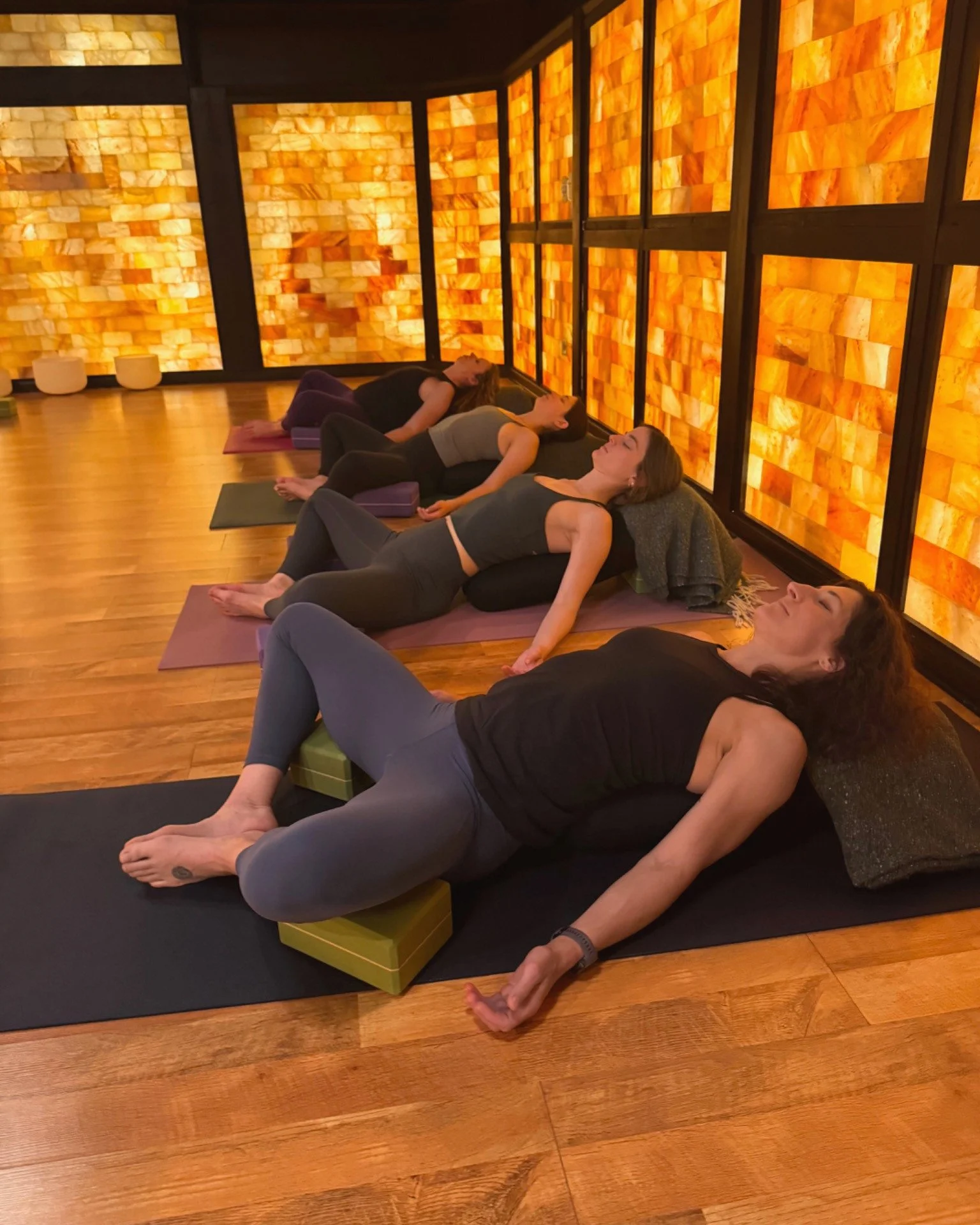
Unlike a flow-based or strengthening practice, restorative yoga uses props—bolsters, blankets, and blocks—to fully support your body in a small number of gentle, passive poses held for several minutes at a time.
There's very little "doing."
The invitation is the opposite: to stop doing and allow yourself to be supported.
That stillness matters.
When your body is comfortably supported, you may begin to notice your breathing becoming easier, your muscles softening, and your attention turning inward.
Gentle breathing and supported rest can encourage relaxation and offer a welcome pause from the demands of daily life.
For someone experiencing grief, that pause may be especially meaningful.
Restorative yoga also offers something different from talking about your loss.
Instead of needing to find the right words, you're given time and physical support to simply notice what's there—the tightness, the ache, the heaviness, or perhaps even moments of ease.
You don't have to explain, change, or resolve what you're feeling.
And you don't have to force an emotional release.
Sometimes, simply allowing yourself to rest and notice your experience is enough for that moment.
Inviting Your Body Into the Healing Process
This is the foundation of Held: Movement + Healing Through Grief, a workshop at Prana Yoga Center in Geneva, Illinois.
Through restorative yoga, mindful movement, breath, and guided group practices, we'll create space to explore grief both individually and in community.
Grief can arise from many forms of loss—not only the death of someone we love, but also changes in relationships, health, identity, or the life we once imagined.
Whatever brings you to the practice, you're invited to arrive as you are.
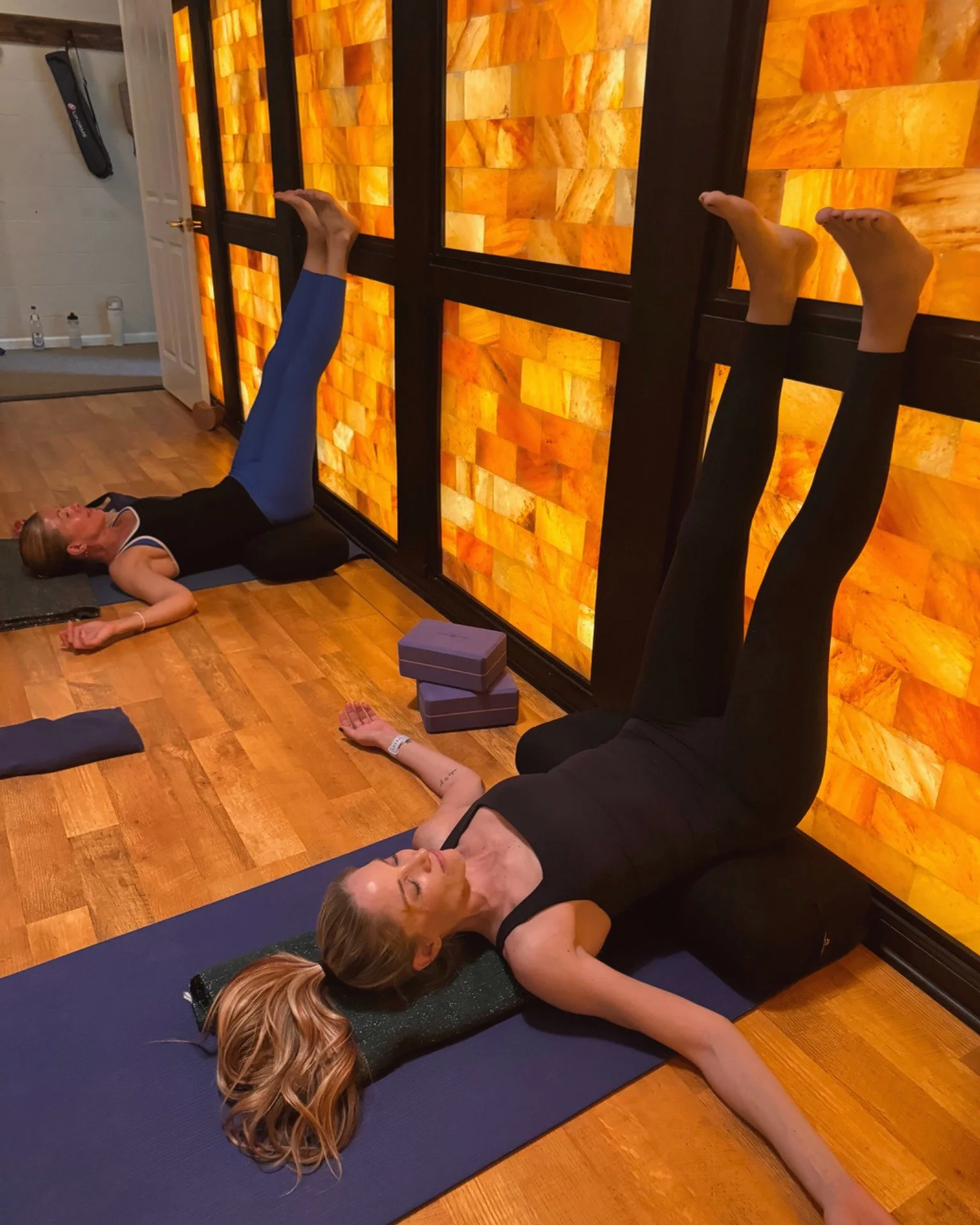
You won't be asked to fix or finish your grief in an afternoon.
You'll be doing something quieter: making space, supported by props and by others around you, for your body to participate in a process that can sometimes feel overwhelming to navigate alone.
Grief asks a lot of you. Restorative yoga doesn't ask you to do more.
It invites you to stop, be held, and give yourself permission to rest.
Grief asks a lot of you. Restorative yoga doesn't ask you to do more.
Explore Held: Movement + Healing Through Grief
Join Kristen Kauke at Prana Yoga Center for a compassionate exploration of grief through restorative yoga, mindful movement, breath, and group connection.
Sunday, October 18 | 1:00 PM
This workshop offers a supportive space to honor your experience without pressure to change how you feel.
Frequently Asked Questions
-
Restorative yoga may offer a gentle way to support yourself while grieving. Through comfortable, supported poses and mindful breathing, the practice creates opportunities for rest, relaxation, and greater awareness of physical sensations and emotions.
It isn't a treatment for grief, but it can complement other forms of emotional support.
-
No. Restorative yoga generally involves simple, supported poses rather than demanding physical movements.
Props such as bolsters and blankets help make the practice comfortable and accessible. Poses can be adjusted to accommodate individual needs.
-
Emotions may arise during quiet, reflective practices, but they don't have to.
You don't need to cry, share personal experiences, or experience an emotional release for the practice to be meaningful.
It's also okay to rest, change positions, or take a break whenever you need to.
-
Prana Yoga Center in Geneva offers restorative yoga and other gentle, supportive practices designed to encourage relaxation and mindful awareness.
Specialty workshops such as Held: Movement + Healing Through Grief provide additional opportunities to explore the relationship between movement, rest, and emotional well-being.