
National Relaxation Day: Why Your Nervous System Needs More Than a Day Off
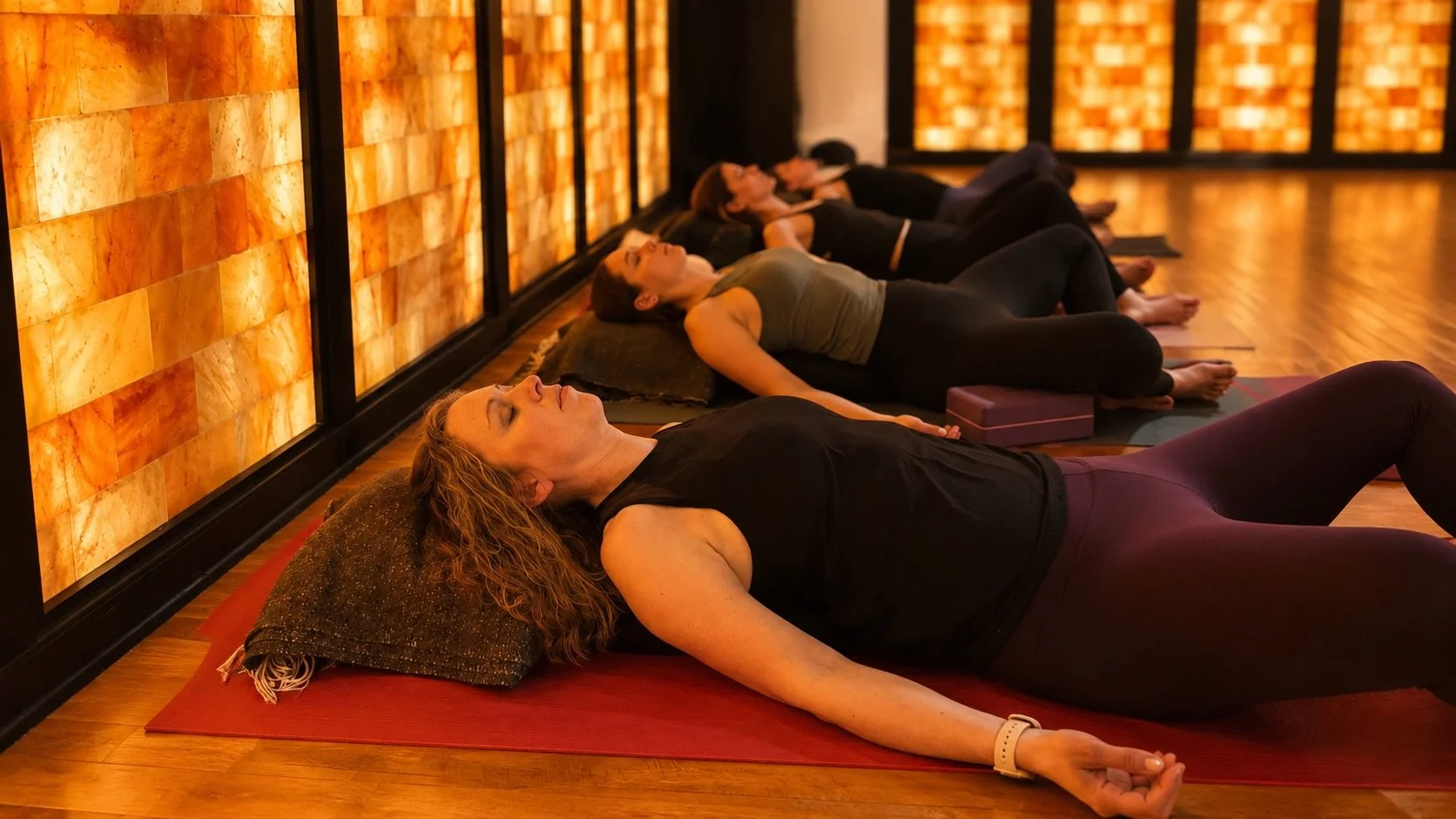
In Prana Yoga Center’s Himalayan Salt Room, restorative practice offers a quiet place to shift from doing into being.
When was the last time you truly relaxed?
Not the kind of relaxation that comes from scrolling your phone on the couch or collapsing into bed after a long day.
The kind where your body softens, your breathing becomes easier, your mind grows quieter, and you remember what it feels like to simply be.
For many of us, that kind of rest has become increasingly rare.
Your calendar is full. Your mind is already planning the next thing. And even when you finally have a moment to yourself, it can be surprisingly difficult to shift out of “go” mode.
That's what makes National Relaxation Day, celebrated each year on August 15, a welcome reminder: rest is essential—not optional.
At Prana Yoga Center, we think of relaxation as a skill you can practice. Just like strength, flexibility or balance, the more familiar you become with slowing down, the easier it may become to return to that state when life feels especially full.
Why Relaxation Is More Than Taking a Break
Modern life asks a lot of us.
Between work, family, caregiving, schedules and the constant stream of information competing for our attention, it can feel as though there is always something else requiring a response.
The sympathetic nervous system is part of the body's natural stress response—the familiar “fight-or-flight” system that helps prepare us to respond when something requires our attention.
That response is useful.
The challenge comes when we rarely give ourselves opportunities to come down from it.
Stress can show up differently for everyone. You may recognize it as:
Difficulty settling down at night
Muscle tension
Headaches or jaw tightness
Digestive discomfort
Irritability
Mental fatigue
Feeling tired but unable to truly rest
Your body is continually adapting to what you ask of it.
And your nervous system is adaptable, too.
Creating regular opportunities for slower breathing, mindful movement and rest can help you become more familiar with shifting out of constant activity and into a calmer state.
What Is the Parasympathetic Nervous System?
The parasympathetic nervous system is sometimes described as the body's “rest-and-digest” system.
It is associated with many of the body's quieter restorative functions, including digestion and recovery after stress.
You don't need to understand the science to recognize the experience.
Your breathing becomes slower.
Your muscles soften.
Your attention feels less scattered.
You feel more present.
Research into slow breathing has found measurable effects on heart-rate variability and autonomic regulation, offering one possible explanation for why breath-centered practices can feel so calming.
And sometimes, the first step toward that quieter state isn't becoming completely still.
It's moving more slowly.
Why Gentle Movement Can Help You Relax
One of the misconceptions about relaxation is that you should simply stop moving.
But after a demanding day, lying down doesn't necessarily make the mind quiet.
You may have experienced it yourself: the body finally stops, and suddenly your mind starts reviewing conversations, writing tomorrow's list or remembering everything you didn't finish.
That's why a gradual transition can be so valuable.
Slow, mindful movement can create a bridge between activity and stillness.
As movement begins to follow the rhythm of your breath, you have an opportunity to feel what's happening inside your body rather than continuing to move through the world on autopilot.
Muscles may begin to soften.
Breathing may become slower and steadier.
Attention begins turning inward.
Rather than forcing relaxation, you invite it.
Rather than forcing relaxation, you invite it.
Restorative Yoga: The Art of Doing Less
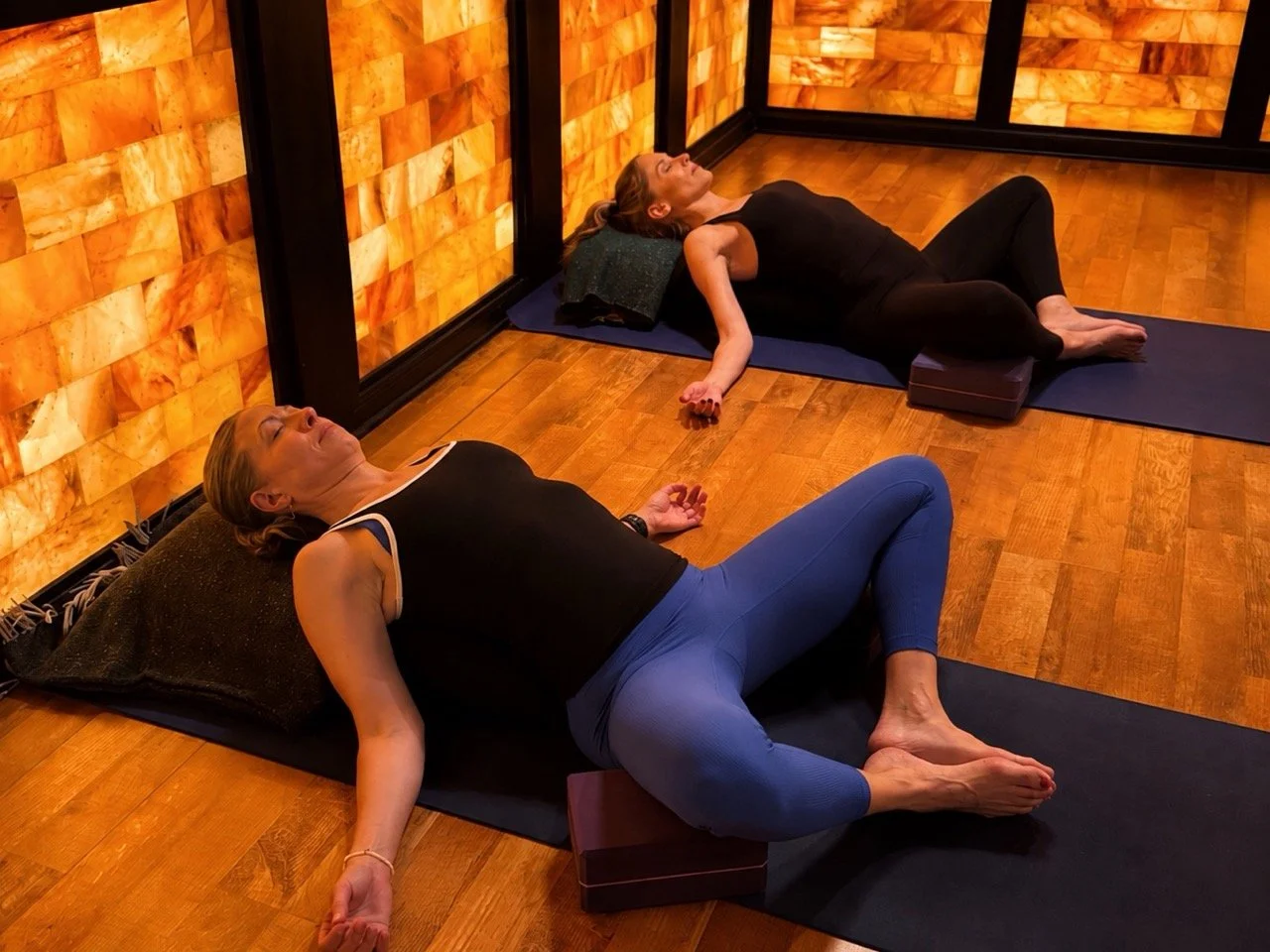
Support from blankets, blocks, and the floor allows the body to soften into stillness.
Restorative yoga is about creating the conditions for your body to soften.
There is no need to stretch farther or hold a challenging pose.
Instead, bolsters, blankets, and blocks help comfortably support your body so that you can spend time in each posture without unnecessary effort.
Instead of working, you're receiving support.
Instead of striving, you're softening.
Instead of asking your body to perform, you're giving it time to settle.
That simplicity can feel surprisingly profound.
You may notice tension you didn't realize you were carrying.
You may become aware of thoughts that were hidden beneath the busyness of the day.
Or you may simply experience a few quiet moments when there is nowhere to rush and nothing you need to accomplish.
If you're interested in exploring another approach to deep rest, learn more about Yoga Nidra, a guided practice that invites the body into stillness while awareness remains present. Prana's existing Yoga Nidra resource explores this relationship between deep rest, stress, and restoration in greater depth.
What Happens When You Finally Slow Down?
If you've spent years moving from one responsibility to the next, slowing down can actually feel unfamiliar.
Your mind may keep making to-do lists.
You may feel the urge to fidget.
You may wonder whether you're “doing it right.”
If you're showing up, you're already practicing.
Relaxation doesn't require a perfectly quiet mind.
It means giving yourself enough space to notice what is happening—and enough time to settle.
As that becomes more familiar, you may begin noticing the effects beyond your yoga mat.
Perhaps you catch yourself taking a slower breath before responding during a stressful conversation.
You notice your shoulders tightening and soften them.
You recognize that you're tired before reaching complete exhaustion.
These aren't necessarily dramatic transformations.
They're small shifts in awareness that can gradually change the way you move through everyday life.
Giving Yourself Permission to Rest
For many people, the hardest part of relaxation isn't the practice.
It's giving themselves permission to do it.
You may tell yourself you'll rest after one more email, one more errand, one more load of laundry, or one more thing crossed off the list.
But rest isn't a reward for productivity.
Rest isn't a reward for productivity.
Rest helps make space for everything else you value.
A clearer mind.
More patience.
Greater awareness of your body.
A little more capacity to meet the next moment.
Choosing to rest isn't about withdrawing from your life.
It's one way of supporting yourself within it.
Celebrate National Relaxation Day at Prana Yoga Center
This National Relaxation Day, you're invited to experience relaxation as a practice rather than simply a break from your day.
You'll begin with slow, rhythmic movement linked with breath, giving your body time to transition away from the pace of everyday life.
As the movement becomes quieter, you'll settle into fully supported restorative postures using props and plenty of time in each shape.
There is no need to push.
No need to strive.
No need to perform.
You'll be encouraged to move at your own pace, breathe naturally and pay attention to what you notice as the noise of the day begins to settle.
This practice isn't about becoming more flexible.
It isn't about burning calories.
And it isn't about achieving the perfect pose.
It's about letting your nervous system exhale.
If you've been craving more peace, more spaciousness, or simply an opportunity to reconnect with yourself, this special members-only class offers a place to do just that.
Because sometimes the most powerful thing you can do isn't to work harder.
It's to give yourself permission to rest.
Members, you can reserve your spot in our special National Relaxation Day class with Kristin on Saturday, August 15.
You can also explore Prana's class schedule for ongoing restorative, yoga, and meditation practices. Prana currently offers more than 30 weekly classes spanning restorative, Hatha, Vinyasa, Pilates, meditation, and other mind-body practices.
Frequently Asked Questions
-
Restorative yoga is a gentle practice that uses props such as bolsters, blankets, and blocks to comfortably support the body in restful postures. Rather than working deeply into a pose, the emphasis is on support, stillness, and ease.
-
Slow movement, mindful attention, and intentional breathing can help create a gradual transition from the activity of daily life into a calmer state. Research on slow breathing has found effects on heart-rate variability and autonomic regulation, which may help explain why breath-centered practices are often experienced as relaxing.
-
No. Restorative yoga does not require advanced flexibility or previous yoga experience. Props support the body so you can settle comfortably into each posture and practice at your own pace.
What helps you know that you've shifted from simply taking a break to actually feeling rested?
Tell us when you see us at the studio—or share it with us in the comments below.