
Turning Your World Upside Down
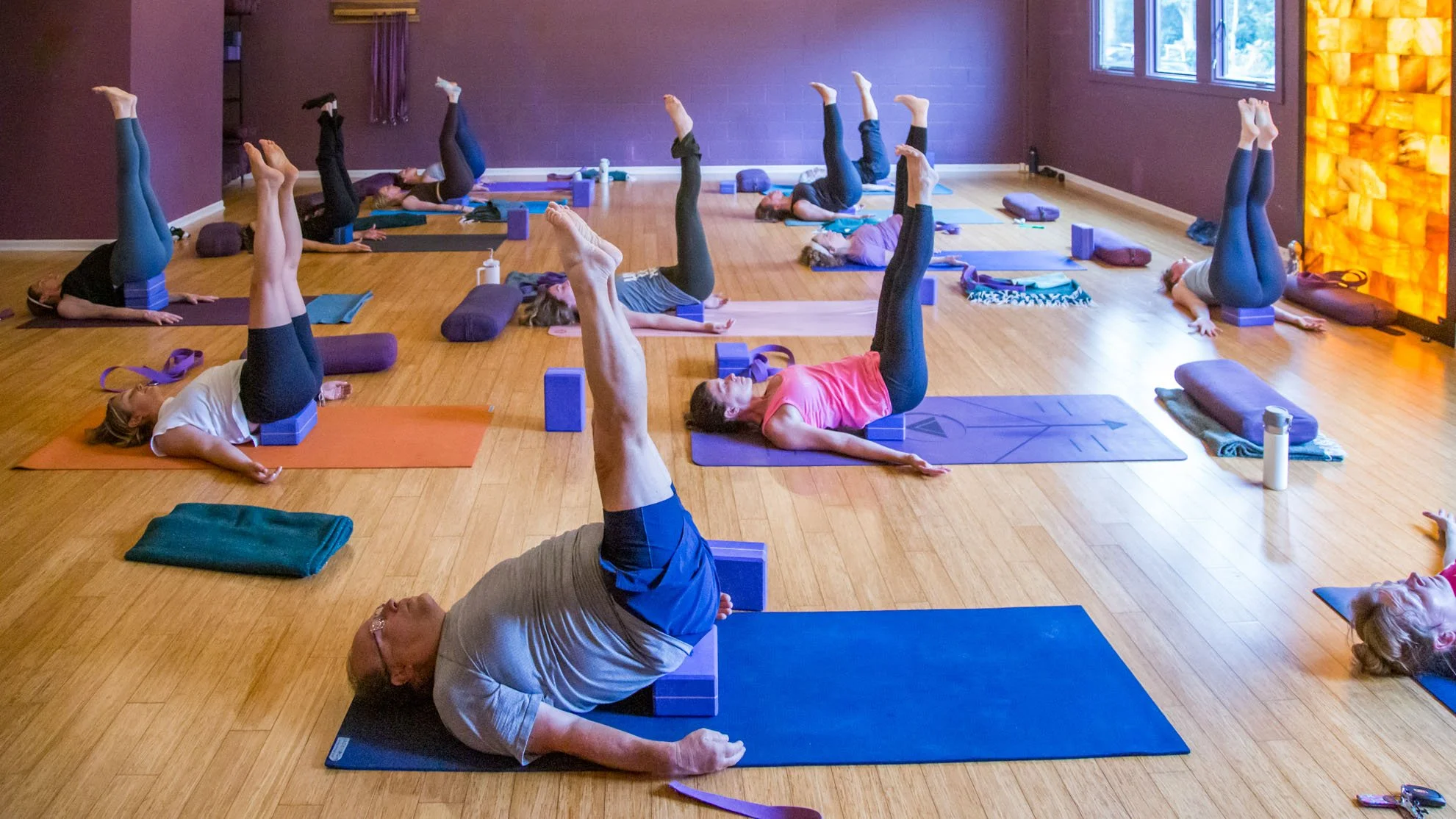
A lighthearted guide for the curious, the cautious, and the “I’ll do it someday” crowd.
A grounded look at yoga inversions—benefits, myths, and where to begin
You’ve seen it happen in class. Someone lifts into a headstand like gravity is optional… and you’re on your mat thinking, I could do that. I just don’t want to.
No judgment. That internal conversation is part of the practice.
But if there’s even a small part of you that’s curious—about what inversions actually do, why they matter, and whether they’re as intimidating as they seem—this is for you.
Have you ever been curious about going upside down—but talked yourself out of it?
(If this resonates, feel free to share your experience in the comments.)
Let’s take a closer look.
A Brief History of Going Upside Down
Inversions aren’t new. They’ve been part of traditional Hatha yoga for centuries, with poses like Sirsasana (headstand) often referred to as the “King of Asanas.”
Teachers like Sri Tirumalai Krishnamacharya helped bring these practices into the modern world, influencing students like B.K.S. Iyengar—who continued practicing inversions well into his later years.
The takeaway isn’t that you should be doing advanced inversions.
It’s that these practices were always meant to be accessible, progressive, and intentional.
The Fear Is Real (and Completely Valid)
Let’s be honest.
You’re being asked to:
Put your head below your heart
Lift your feet off the ground
Trust your body in a new way
Of course there’s hesitation.
Common fears include:
Falling
Hurting your neck
Looking awkward
Feeling like “this just isn’t for me”
Here’s the shift:
Your fear isn’t the problem. Going too far, too fast is.
The Biggest Myths About Inversions
“Inversions are only for advanced yogis.”
They’re not.
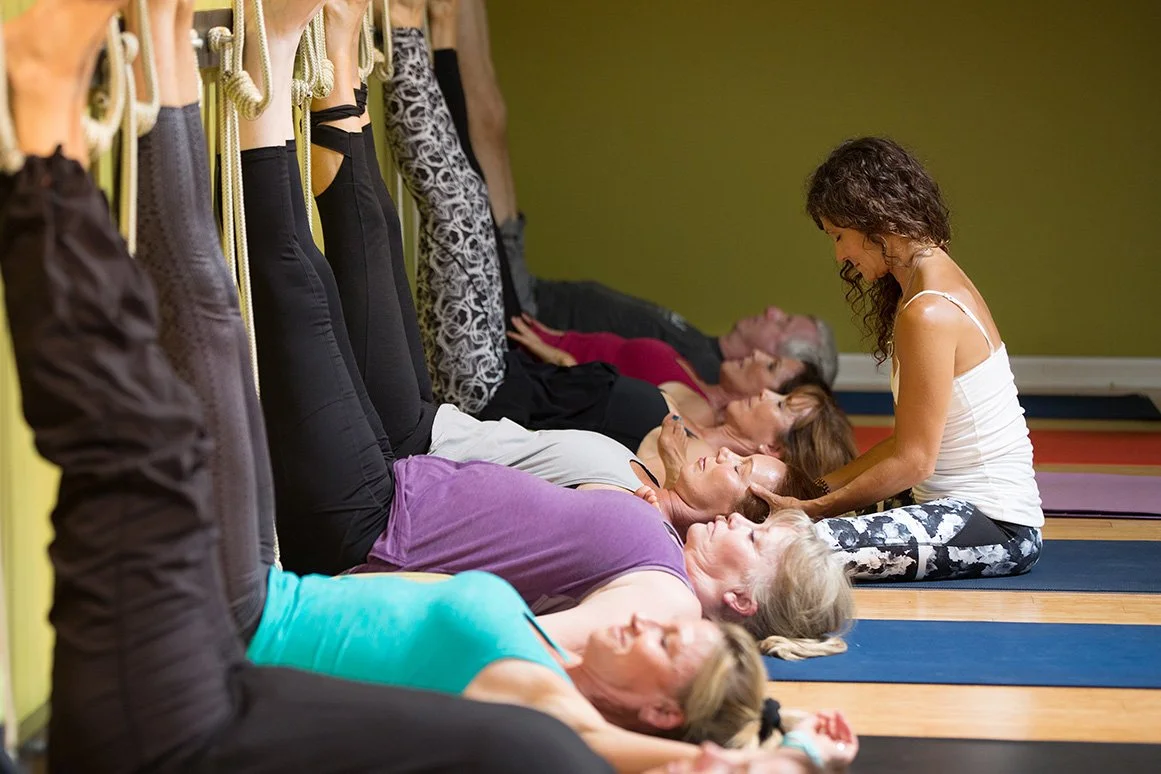
Legs-up-the-wall is an inversion.
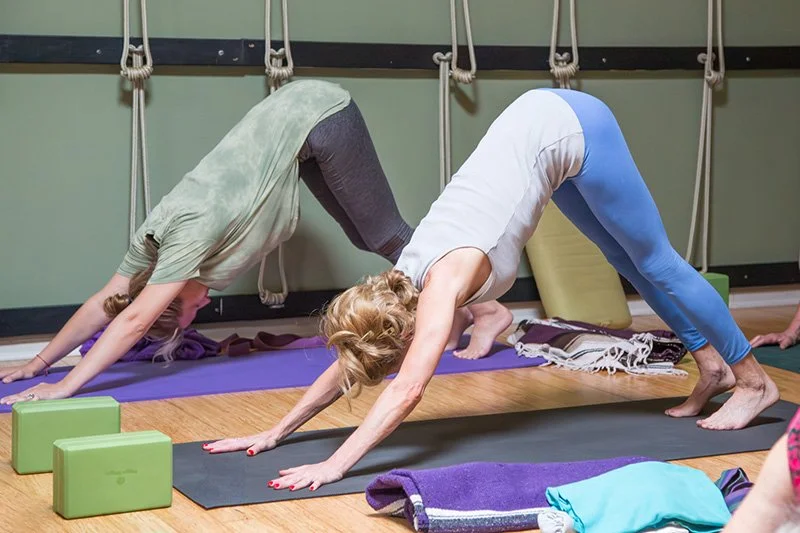
Downward dog is an inversion.
Inversions exist on a spectrum—and you are likely already practicing them.
“I’m going to fall and hurt myself.”
With proper setup and guidance, most “falls” are slow, controlled, and uneventful.
Learning how to safely exit a pose is part of the practice.
“Inversions are bad for your neck.”
They can be—if done without alignment or support.
Alignment matters.
A well-supported inversion distributes weight through the arms and shoulders—not the neck.
“I’m too old / stiff / not strong enough.”
You’re not.
You don’t have to be advanced to benefit.
What’s Actually Happening in Your Body
This is where it gets interesting.
When you go upside down:
Circulation shifts, bringing blood toward the upper body and brain
The heart gets a break from working against gravity
The lymphatic system is stimulated, supporting natural detoxification
The nervous system responds, often calming the body
Even gentle inversions activate the vagus nerve, helping shift the body into a more relaxed state.
You’re not imagining that calm feeling—it’s physiological.
The Real Benefits of Inversions
Without exaggeration, here’s what they can support:
Improved circulation, especially if you sit or stand for long periods
Reduced stress, through nervous system regulation
Strength and stability, particularly in the core and shoulders
Better balance and focus, as your brain adapts to new spatial awareness
A noticeable mood lift, from both the physical shift and the mental breakthrough
Even gentle inversions have real physiological benefits.
A Note on Safety & Blood Pressure
Inversions can be incredibly beneficial, but they aren’t for everyone. Because the body is positioned with the head below the heart, these shapes can influence circulation and blood pressure.
If you have high blood pressure, are unsure of your blood pressure, or have certain medical conditions, it’s best to consult with your healthcare provider before practicing inversions.
In our classes and workshops, inversions are always optional. We offer thoughtful preparation, the use of props, and alternative shapes so you can explore the practice in a way that feels safe and supportive for your body.
Where to Start (A Smarter Way In)
You don’t need to jump into a headstand.
This is where most people should begin:
Legs-up-the-wall (5–10 minutes)
Downward-facing dog
Supported variations using the wall or props
You don’t have to start with a headstand.
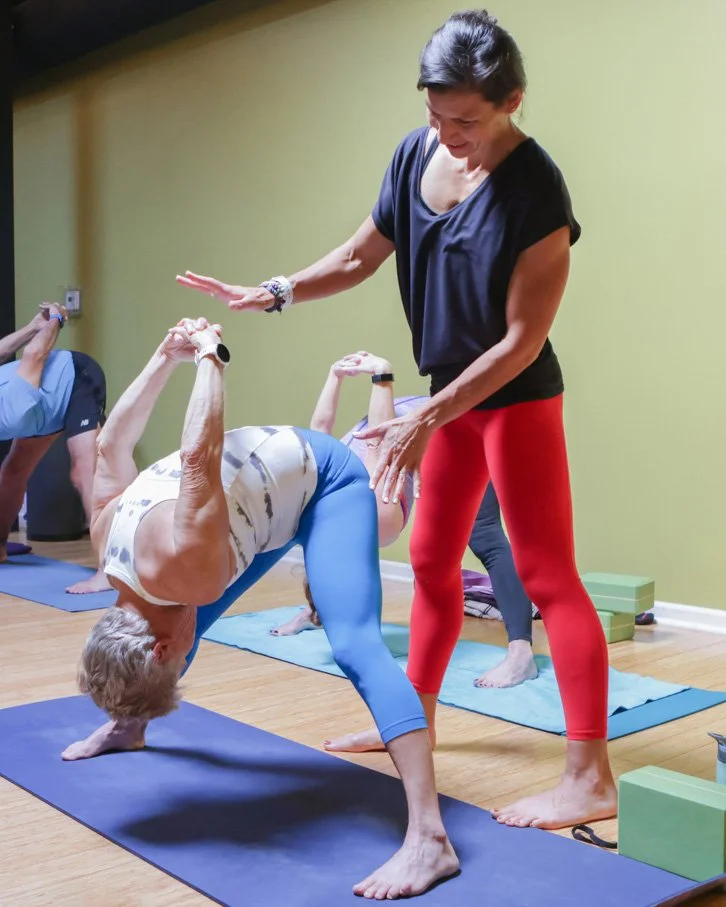
Hands-on guidance helps build the strength, alignment, and confidence needed for inversions.
From there, working with a teacher makes all the difference—especially when learning alignment, strength, and safe progressions.
The Upside of Being Upside Down
There’s something powerful about changing your perspective—literally.
Inversions challenge your body, focus your mind, and invite you into something new.
You don’t have to be fearless. You just have to be curious.
And if you’ve made it this far, you already are.
Explore the Art of Inversions
Sunday, April 19 with Sarah Lindgren
Curious about going upside down—but not sure where to start?
This 90-minute workshop gives you the time and guidance to build strength, understand the foundations, and explore inversions with support. You’ll work with props, learn how to engage the core and bandhas, and receive hands-on assistance as you move toward headstand and handstand.
A steady, supported place to begin—or deepen your practice.
Yoga teachers can also receive CEUs and a certificate of completion.
A Gentle Note
Always consult with a qualified teacher or healthcare provider before exploring new poses, especially if you have neck concerns, high blood pressure, or other conditions.
At Prana, we’re here to help you find your version of the practice—safely, progressively, and with support.