
Yoga and Pilates Together: How Each Practice Makes the Other Better
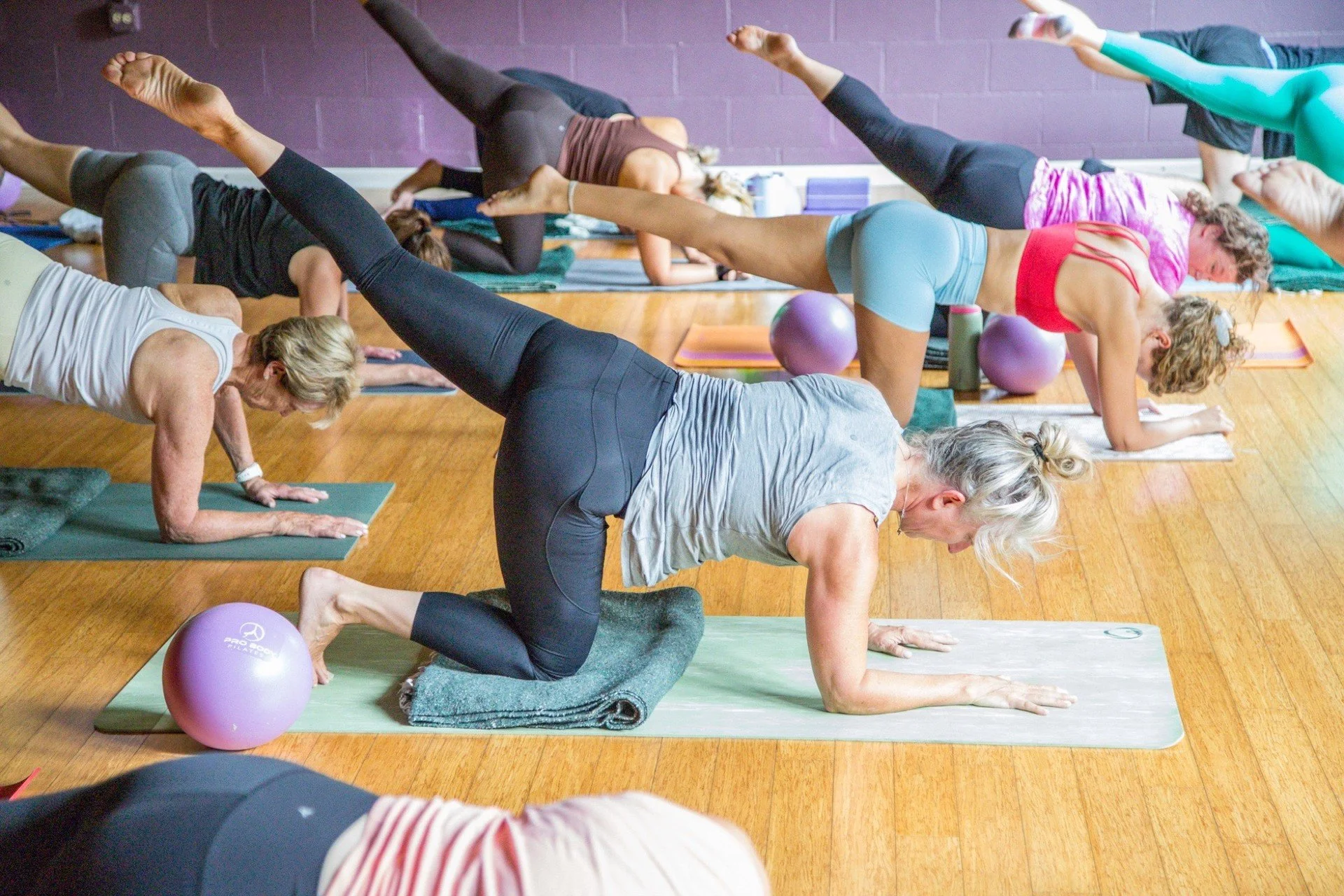
If you practice yoga, you may have looked at Mat Pilates and wondered, Isn’t that completely different?
Or perhaps you’ve taken Pilates and noticed that certain movements, shapes and ideas feel surprisingly familiar.
At Prana Yoga Center in Geneva, Illinois, we see students discover the connection between these two practices all the time.
Yoga and Pilates developed from very different traditions, but both ask you to move with awareness, concentration and intention. Both explore the relationship between breath and movement. And both encourage you to pay attention not only to what your body is doing, but how you’re doing it.
Most importantly, each practice can support the other.
Pilates can build strength, stability and control that you carry onto your yoga mat. Yoga can bring mobility, balance, breath awareness and a different kind of mindful attention to your Pilates practice.
Rather than choosing one or the other, you may discover that Pilates and yoga together create an especially well-rounded approach to movement.
Joseph Pilates and the Influence of Yoga
Joseph Pilates developed his movement method, originally called Contrology, during the early 20th century.
His approach grew from his exploration of many kinds of physical training, including gymnastics, boxing, martial arts and yoga. Over time, control, concentration, precision, fluid movement and intentional breathing became central to the method.
If you practice yoga, some of that may sound familiar.
Yoga has existed for thousands of years and encompasses far more than physical movement. Yet the physical practice similarly asks us to connect movement with breath, cultivate awareness and move intentionally rather than simply complete repetitions.
You may even recognize similarities between certain Pilates exercises and yoga postures. Their purpose and execution aren’t necessarily the same, but the overlap can be fascinating to explore.
Does Pilates Help Your Yoga Practice?
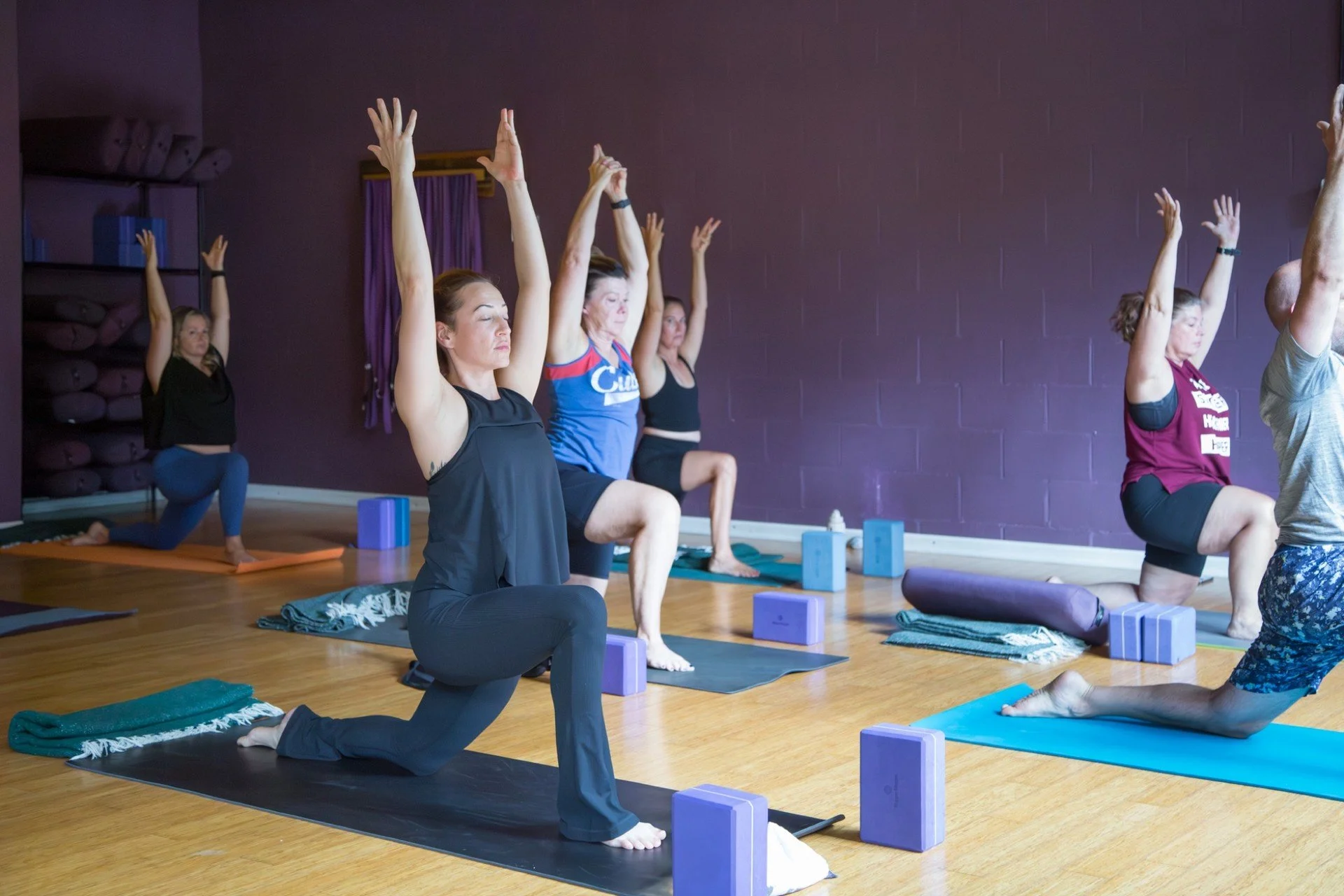
Recently, a Prana Yoga Center member shared something with us that captured this connection beautifully.
After regularly practicing yoga at Prana, he decided to try Mat Pilates when we began offering it at the studio.
He had never practiced Pilates before. In fact, he admitted that if Prana hadn’t offered it, he probably wouldn’t have gone looking for a Pilates class elsewhere.
What surprised him was how much Pilates began to change his yoga practice.
It makes sense when you consider what Pilates develops.
Pilates places a strong emphasis on deep core strength, pelvic stability and spinal control. Rather than thinking only about your abdominal muscles, you begin developing awareness of the deeper muscles that support and stabilize your body.
Bring that awareness back onto your yoga mat and familiar poses may begin to feel different.
You might notice:
greater stability in balancing poses
more control through transitions
increased awareness of how you support your spine
a stronger connection between your core and your movement
Pilates doesn’t replace what you learn through yoga. It gives you another way of understanding how your body moves.
Pilates may help you create the stability to support your mobility, while yoga gives you opportunities to explore that mobility.
How Yoga Can Support Your Pilates Practice
The relationship works both ways.
While Pilates can develop strength, stability and control, yoga can complement Pilates through mobility, flexibility, balance and body awareness.
Yoga often gives you more time to explore ranges of motion and notice where you hold tension. Depending on the style you practice, you may stay in a posture longer, move through larger ranges of motion or deliberately shift from movement into stillness.
That can beautifully complement the controlled strengthening work of Pilates.
Think of it this way:
Pilates helps create stability to support mobility. Yoga gives you space to explore that mobility.
You don’t necessarily need to choose between strength and flexibility.
Practicing both can help you become strong and mobile.
Breath: One Powerful Connection—and One Important Difference
One of the most interesting connections between yoga and Pilates is the importance both place on breath.
Joseph Pilates considered breathing an essential part of his method. Pilates movements aren’t meant to be performed while unconsciously holding your breath. Breath helps coordinate movement, support core engagement and maintain rhythm and control.
Yoga also places enormous importance on breath, with breath awareness and pranayama woven deeply into the practice.
But the techniques aren’t identical.
In many Pilates exercises, you may be guided toward lateral or rib-cage breathing, expanding the breath into the sides and back of the ribs while maintaining abdominal support. The exhale may also help coordinate core engagement with movement.
Yoga breathing varies depending on the practice and its intention. In many classes, you’ll breathe primarily through your nose. You might encounter Ujjayi breathing or specific pranayama practices used to calm, energize or focus the body and mind.
The techniques may differ, but the underlying idea connects them:
Your breath isn’t separate from your movement—it’s part of it.
How Often Should You Practice Yoga and Pilates Together?
There is no single schedule that works for everyone.
Your ideal mix depends on your goals, your experience, the other activities in your life and simply how your body feels.
If yoga is already your primary practice, try adding one Mat Pilates class each week and notice what changes.
Do balancing poses feel different? Are transitions more controlled? Are you noticing your core or pelvis in ways you didn’t before?
If Pilates is already part of your routine, try adding a yoga class and notice what happens when you spend more time exploring mobility, balance, breath and stillness.
You don’t have to build the “perfect” schedule.
Start by exploring.
Why Practice Yoga and Mat Pilates at Prana Yoga Center in Geneva, IL?
You don’t have to choose between yoga and Pilates.
At Prana, you can explore both within the same studio community.
You might build core strength and refine movement patterns in Mat Pilates, then carry that awareness into Hatha, Vinyasa, Yin, Restorative or another yoga practice.
Prana offers both yoga and Mat Pilates classes for a range of experience levels, making it easier to explore both practices without needing to find separate studios or communities.
For students looking for yoga and Mat Pilates classes in Geneva, IL, that means more freedom to build a movement practice that supports strength, mobility, balance and body awareness in different ways.
Sometimes stepping outside your usual routine is exactly what helps your favorite practice evolve.
If you’re new to the studio, Prana’s 14-day introductory offer is an easy way to experience both yoga and Pilates.
That was certainly true for the Prana member who inspired this article. Having access to both yoga and Pilates encouraged him to try something he otherwise might never have explored—and Pilates has now become an important part of what makes his yoga practice feel stronger.
The next time you practice Pilates, notice the moments that remind you of yoga.
And the next time you step onto your yoga mat, notice whether the strength, stability and body awareness you’ve developed through Pilates show up there, too.
You may discover that these two practices aren’t competing for your time.
They’re complementing each other.
Ready to explore both? View Prana’s class schedule and find a class that fits your week.
Frequently Asked Questions About Yoga and Pilates
-
Yes. Yoga and Pilates are different practices, but they can complement one another well. Pilates can develop core strength, stability and movement control, while yoga can support mobility, balance, flexibility, breath awareness and mindful movement.
-
It can. Greater core awareness and stability may help you feel more supported in balancing poses, transitions and other yoga postures. Pilates can also help you become more aware of how your pelvis and spine move during your practice.
-
Yoga typically places greater emphasis on exploring mobility and flexibility, although Pilates also works through functional ranges of motion. Practicing both can give you a useful combination of mobility and stability.
-
There is no single ideal schedule. Start with your current practice and add one class from the other discipline. Notice how your body responds and adjust from there.
-
Prana Yoga Center in Geneva offers both yoga and Mat Pilates classes within the same studio community. Students can explore multiple yoga styles alongside Pilates, making it easier to build strength, mobility, balance and body awareness through a varied movement practice.
-
No. If Pilates is new to you, let your teacher know, listen to your body and explore the options offered during class.
We’d Love to Hear From You
Do you practice yoga, Pilates—or both?
Tell us in the comments below: Which part of your practice would you most like to develop right now—strength, mobility, balance, body awareness or simply trying something new?