
Why Your Body May Feel Tighter in Midlife: Understanding Foot, Shoulder & Joint Pain
Written by Michelle Mansfield, RYT 250, Certified Menopause Yoga Teacher and Certified Mat Pilates Teacher
Reviewed by Jessica Taddeo, OTR/L, RYT 500, and Yoga Therapist in Training
Have you ever woken up and wondered, “Why does my body suddenly hurt?”
Maybe your calves feel perpetually tight even though you stretch them. Perhaps you’ve developed new heel or arch pain. Your shoulders don’t move as freely as they once did, your neck constantly feels tense, or reaching an arm overhead suddenly feels different.
And you may be thinking: I haven’t changed anything—so why is my body changing?
If you’re in your 40s, 50s, or beyond, you’re certainly not alone. Aches, stiffness, recurring tightness, foot pain, and shoulder discomfort can become more noticeable during midlife.
There is rarely one explanation. Activity patterns, previous injuries, strength, joint mobility, repetitive movement, footwear, stress, sleep, and recovery may all play a role.
For women, there may be another part of the picture: perimenopause and menopause.
How Perimenopause and Menopause May Affect Movement
You probably associate estrogen with the menstrual cycle, hot flashes, or other familiar symptoms of menopause. But estrogen is also involved in the health of your bones, muscles, joints, tendons, ligaments, and other connective tissues.
During perimenopause, hormone levels can fluctuate considerably. After menopause, estrogen generally remains at a lower level.
A growing body of research is examining how these hormonal changes may affect musculoskeletal health. They may be one reason some women notice more joint discomfort, stiffness, changes in strength, or slower recovery during midlife.
That does not mean hormones are responsible for every new ache or pain. Age, activity, injury history, sleep, stress, and overall health still matter.
But that feeling of “My body doesn’t move the way it used to” is not necessarily your imagination—and it deserves curiosity rather than judgment.
Why Do You Feel So Tight?
When something feels tight, your first instinct may be to stretch it.
Tight calves? Stretch them.
Tight shoulders? Stretch them.
Tight hamstrings? Stretch them again.
But feeling tight does not always mean you need more flexibility.
Tightness is a sensation, not a diagnosis. Sometimes a muscle feels tight because it has been working hard, because a nearby joint is not moving comfortably, or because the surrounding muscles are not providing enough strength or support.
Stress, fatigue, changes in activity, and the body’s natural protective responses may also influence how tense or guarded an area feels.
Stretching may provide welcome short-term relief. If the same tightness repeatedly returns, however, it may be helpful to look beyond the area that feels tight.
Your body may need a combination of mobility, strength, stability, appropriate loading, and recovery rather than simply a deeper stretch.
Feeling tight does not always mean you need more flexibility.
What Foot and Calf Tightness May Be Telling You
Think about how much you ask of your feet every day. They absorb force, adapt to the ground, support your body weight, help you balance, and propel you forward.
Your feet also do not function in isolation.
Ankle mobility, foot strength, calf capacity, footwear, walking mechanics, activity level, and strength farther up the leg can all affect how your feet feel and function.
These factors may be relevant when someone experiences concerns such as plantar heel pain, arch discomfort, recurring calf or Achilles tightness, or general foot stiffness.
Rather than focusing only on where something hurts, it can be useful to explore how the foot, ankle, lower leg, and the rest of the body are working together.
Why Shoulder and Neck Discomfort Can Feel Complicated
The shoulder is one of the most mobile—and therefore one of the most complex—areas of the body.
Comfortable shoulder movement requires coordination among the upper arm, shoulder blade, upper back, chest, neck, and the muscles that support and control those areas.
That is why shoulder discomfort is not always as simple as having a “tight shoulder.”
During midlife, some women notice persistent neck and shoulder tension, rotator cuff irritation, reduced shoulder mobility, or frozen shoulder. Changes in strength and activity, repetitive movement, prolonged sitting, stress, previous injuries, and hormonal changes may all be relevant.
Once again, stretching the place that hurts may be only one part of the picture.
New, severe, worsening, or persistent pain—or pain accompanied by significant swelling, warmth, weakness, numbness, injury, or loss of function—should be evaluated by an appropriate healthcare professional.
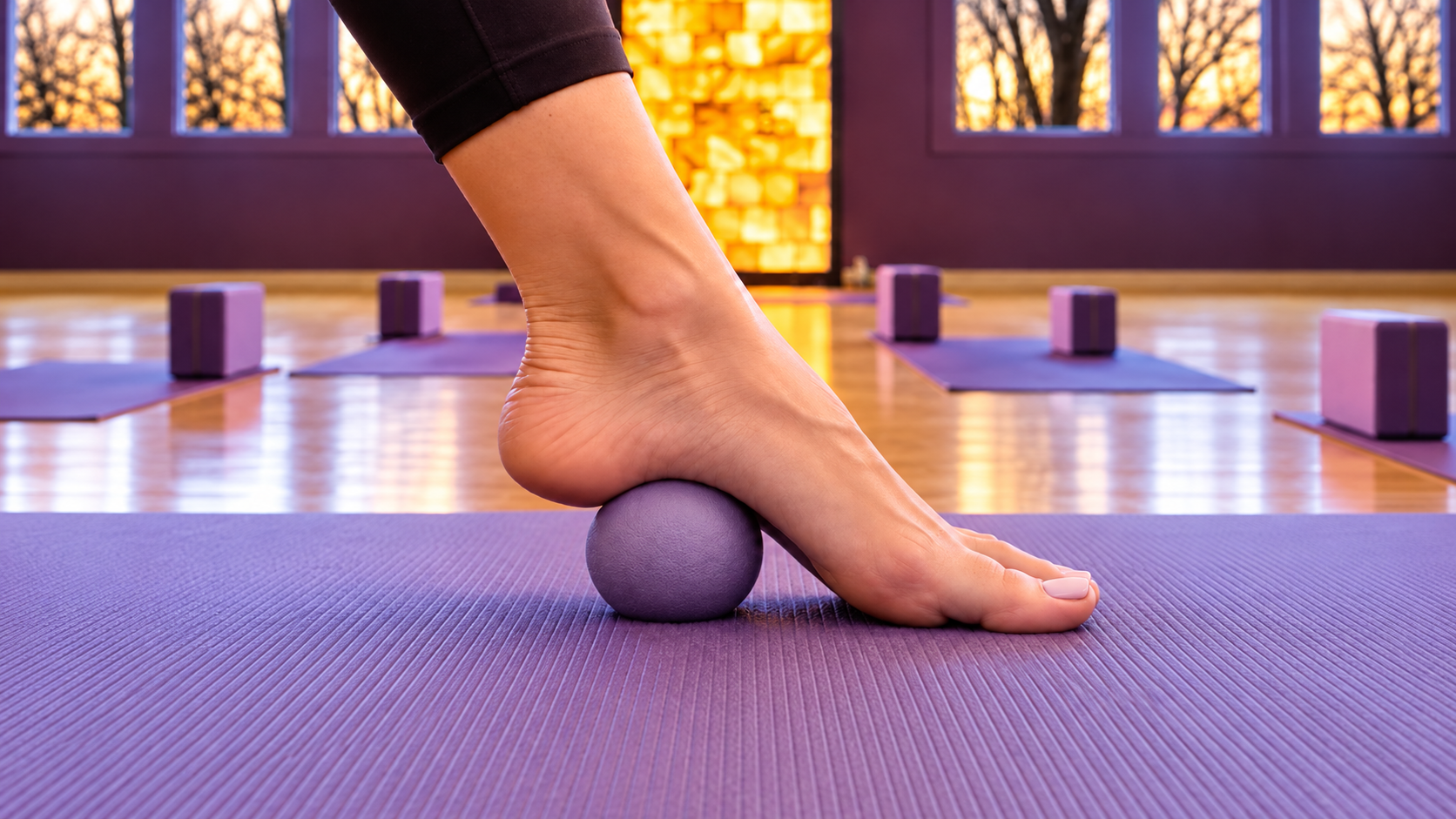
Release, Mobilize and Strengthen
So what might your body need?
There is no single exercise or stretch that is appropriate for everyone. One helpful framework is:
Release. Mobilize. Strengthen.
You may benefit from:
releasing or soothing areas that feel overworked or guarded
restoring comfortable movement around a joint
strengthening the muscles that support that movement
gradually helping your body tolerate appropriate activity
allowing enough time for rest and recovery
The goal is not to “fix” every uncomfortable sensation on your own. It is to become more curious about what your body is communicating and to recognize that recurring tightness may require more than stretching.
Explore Midlife Mobility at Prana Yoga Center in Geneva, IL

Michelle Mansfield (l) and Jessica Taddeo (r)
If this sounds familiar, join Michelle Mansfield and Jessica Taddeo, whose combined backgrounds in occupational therapy, menopause-informed yoga, and Mat Pilates shape this practical, movement-based workshop,
Understanding Chronic Tightness, Shoulder & Foot Pain
Saturday, October 3 | 1:00–2:30 PM
Prana Yoga Center in Geneva, Illinois.
This 90-minute educational and movement-based workshop will explore why foot, shoulder, and neck discomfort may become more noticeable in midlife—and how different types of movement can help you better understand and support your body.
You’ll combine accessible education with guided movement as you explore:
foot and ankle mobility
shoulder function
gentle yoga-based movement
strengthening techniques
self-massage with a small therapy ball
You’ll leave with a clearer understanding of why your body may be feeling different and practical ideas you can begin exploring in everyday movement.
This workshop is educational and is not intended to diagnose or treat an injury or medical condition.
At Prana Yoga Center, our yoga, Mat Pilates, and specialty workshops offer different ways to explore mobility, strength, body awareness, and mindful movement in a supportive studio community.
Your changing body may not need you to stop moving. It may simply be asking you to move differently.
Frequently Asked Questions About Midlife Tightness and Joint Discomfort
-
Hormonal changes during perimenopause and menopause may contribute to joint discomfort, stiffness, changes in muscle function, and slower recovery for some women. However, pain can have many possible causes, including injury, arthritis, repetitive movement, activity changes, and other health conditions. Persistent or concerning symptoms should be discussed with a healthcare professional.
-
A feeling of tightness does not always come from shortened muscles or limited flexibility. Overuse, fatigue, reduced joint mobility, insufficient strength or stability, stress, and protective muscle tension may also play a role. Stretching can feel helpful, but recurring tightness may benefit from a broader approach.
-
Thoughtfully adapted yoga and Mat Pilates can provide opportunities to practice mobility, strength, balance, control, and body awareness. The appropriate class or movement approach depends on your health, experience, and symptoms. Tell your teacher about relevant limitations and consult a healthcare professional when pain is new, severe, or persistent.
-
No previous yoga or Pilates experience is needed. The October 3 workshop at Prana Yoga Center in Geneva, IL, is designed to combine approachable education with guided movement. Participants are encouraged to work within a comfortable range and choose options that feel appropriate for their bodies.
We’d Love to Hear From You
Where does recurring tightness tend to show up most often in your body?
Tell us in the comments below: Do you notice it most in your feet and calves, your shoulders and neck, or somewhere else?